THE IDOLM@STER properly had an event in America, at Anime Central 2026. I have read a bunch people’s reactions and reflection of their trip to the con and I think I don’t have much that I could add. I am too tired to link to all of them, but I’ll try to do some at the end of this post.
Anime Central 2026 is soon upon us, and this year the IDOLM@STER is officially presenting a concert (two parts, one with cast member and the other with mixed-reality style), panels and autographs at the con. Big thanks to the GR and other teams of Acen that made it happen and also Bandai Namco Entertainment for rolling the dice with Acen. It’s definitely their best opportunity for something like this in the USA, so I’m glad they are shooting their shot.
Along with the official programs listed on Acen’s Guidebook, there was a drawing for VIP tickets to the concert. If you won that, congratulations, enjoy my envy, and remember to pay for it.
I am running an “afterparty” for Producers. Currently it’s sold out but I’m trying to move to a larger space(it’s sold out for good now). Tickets and details can be seen here. It’s turning out to be a big party. We will have a few DJs play music. There’ll be a birthday cake. We’ll have some stuff to give away. Maybe more stuff to-be-determined, but it’s in the middle of me trying to fast track a new venue contract to a new space so it’s kind of painful right now. I hope it’s worth it!
There is a separate meetup for Produnus on Sunday. It might already be full.
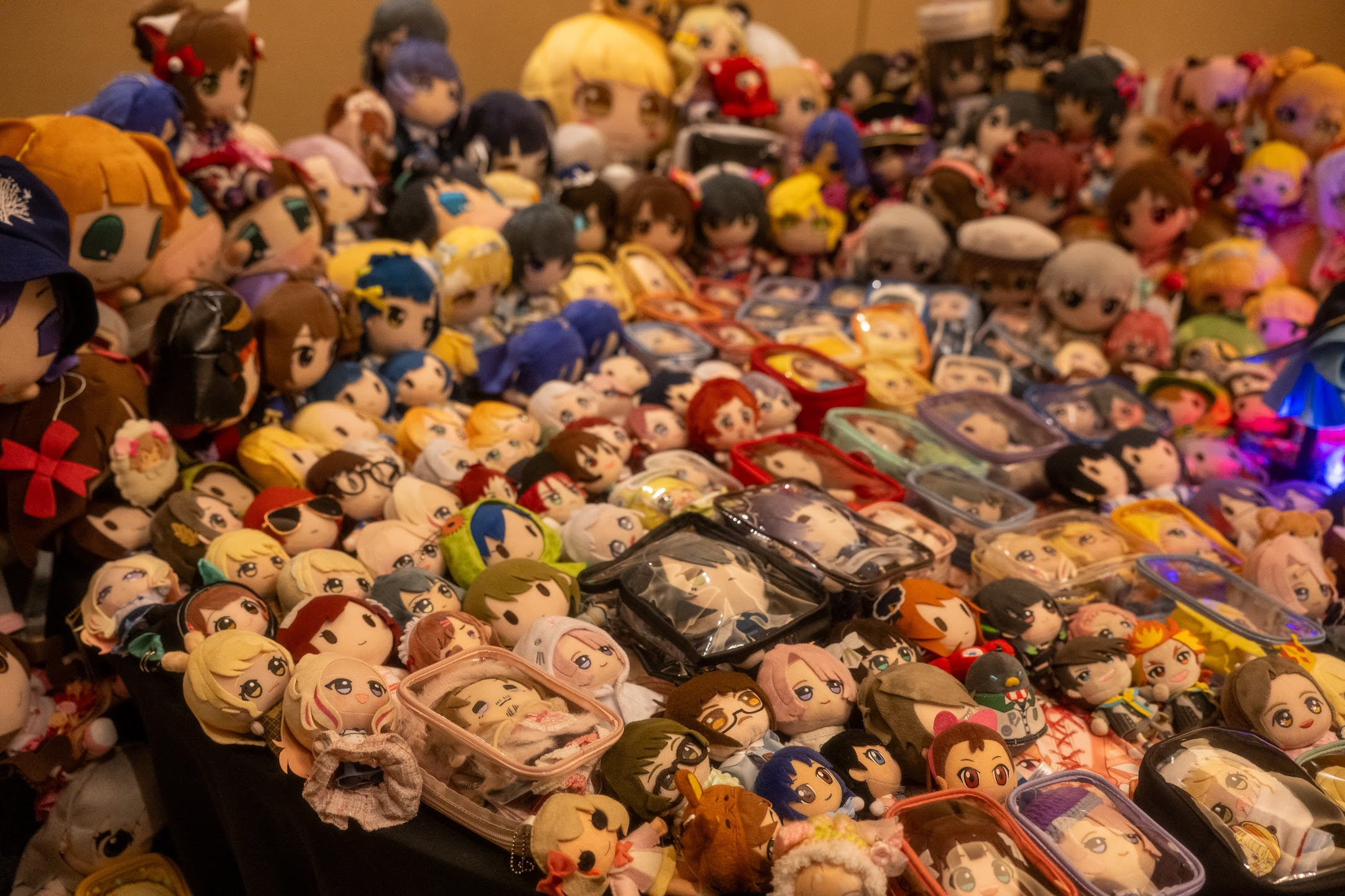
There is a general meet up, which is your usual cosplay meeting at cons but for im@s it has been a general one where you can meet, trade producer cards, and do all that stuff. Cosplay is optional. It’s on Friday at 2pm, flag 6 (check Acen Guidebook for maps). You can see a list of “idol vibe” events here.
For EN first time traveling to Acen there’s a guide some folks put together. I’d endorse like a good 75% of it, the rest I would rephrase differently. That’s still a passing grade so it’s worth a look if you are new. If you read my blog and wants to go, it’s definitely cutting it close, but it’s still very doable if you can manage an affordable flight to Chicago. Food, hotel, and the con itself are not really expensive. Chicago is one of the cheaper cost-of-living cities in the USA, and unlike many cities in this country it’s a real city (lol). It also helps that Acen is right near Chicago O’Hare, which is one of the largest airline hubs in North America with a lot of flight options. It is literally a free hotel shuttle ride away from the airport, or you can take the Blue L.
In terms of the logistics of the IM@S concert on Friday, it’s officially from 6 to 8pm. If you want to get a good seat, you will need to line up early, which will depend on Acen staff and lineup policy. In general they’re not going to allow people to line up more than 2 hours earlier, but it is case-by-case. Looking at the schedule there’s nothing earlier in the day besides the ballroom panels next door, so it could be a sweaty camp.
In addition, it is rumored that there will be merch for sale. More details hopefully will be announced soon. This could change the plans for camping for a space. Anyways, please follow the instruction from staff and try to not cause any issues with traffic flow and the like, when you camp anywhere.
Also, don’t forget about the flower stands in the Exhibition Hall, as well as some banners behind Retro Saikou booth. I’ll have a binder for your Producer Cards and will try to canvas the lines for it. Messages on shikishi is also happening as per prior years
A bunch of imas-fan-DJs will be playing an IM@S set starting around 8:30pm outdoors somewhere Friday night. Details are here. I’ll try to show up after dinner.
Lastly, I will be ghetto-trying to group watch the Gakuen IDOLM@STER HIF Selection event somewhere. I have no idea how, but it does start at 3am for both days, so it ain’t for everyone. I’m just hoping the now DRM-laden Asobistage stream works when I do a HDMI out from a laptop.
Aside from the IDOLM@STER, there are still many other events going on at Acen. There’s like 3 screenings I will have to miss that I would go otherwise. The new Hathaway, for example. Or the world premiere of Goodbye Lara. Yuki Kajiura is returning to Acen also for a concert with FictionJunction, plus panels and autograph ops. There are the guests from Sekai Project also, like U3 and the other illustrators.
With Slay the Spire 2 now in Early Access on Steam, I’ve been slowly pecking at it, reliving playing the first game casually years back. I’ve been also looking at it just like any Gakumas player would–where do these two games overlap?
I am not exactly a big Gakuen Idolm@ster player, in fact I am quite casual about it other than spending money on gacha. I’m not even P Level 70 yet. I’m probably more invested in the characters, the stories, the liveconcerts, and definitely the music, over the game itself.
I’m just writing that I can’t decide which game to play. On one hand, the grind in Slay 2 is a lot easier to mix it up, each run can be quite different than the next, especially at my point in the progression. In Gakumas, I’m generally taking the easiest P idol card to one of the two or three modes and just trying to hit the current event objective, maybe it’s Hajime Legend or NIA (either). I’m actually not all clear on the Step 3s, so I’ll be taking some time to grind that out. It’s kind of annoying some step 3s only gave you a week to clear before the boost period expires, and, uh, my oversea trips are sometimes longer than that!
I have a lot of backlog stuff to do in Gakumas, like all the idol road unlocks (I guess I have some XP to banked up there). I don’t even sweat the contests (auto team all the way, rank 6 and occasionally 7). The nature of service game is that it’s part of your life, a chunk of your routine. Slay 2 ain’t it. Maybe it is why the whole experience feels fresh, kind of like opening a new present on Christmas.
It is definitely a luxurious problem to have, but how do I allocate time to which game that basically scratch a similar itch? In Gakumas, the turns are basically a timer in which you have to hit a goal. In Slay the Spire, you also have to hit a goal (kill the enemy) but the timer is really your defense and health. For some decks it’s a DPS check, for others it’s the equivalent of Magic: the Gathering’s mono blue wincons. Is that something people understand these days? In Slay you are looking at a map and trying to smartly choose the path, choose your rewards, choose your upgrades and artifacts, for the max impact. In Gakumas you are picking usually 1-3 options to max your total stats versus your primary stat, while picking up potion combos and deck upgrades, and oh, there’s health here too.
Maybe it’s more about the issues with service games. You really need to have a good grasp of them before they tear too much of your life away from you. Don’t need them to block you from doing the things you want…indeed, the real buttery lobsters are waiting for you. It’s time to take a break from school to slay some for yourself.
I finally, finally, got to watch it in theaters. On the way home, my playlist rotated to GIRLS’ LEGEND U by chance. This is how it feels, again, to wait and finally fulfill that desire.
It didn’t occur to me at first that the Umamusume feature film, Shinjidai no Tobira, was something you had to see in theaters. I blame that on being exposed to so much lead-up marketing to the film, that desire to watch it as soon as possible–which, with a VPN on U-Next solved a few months after it hit the screens in Japan. I didn’t expect it to be a film that stretches into the contemplative. I would had thought it followed the fierce desire of its protagonist, Jungle Pocket, but the movie was a beast of its own.
Now that it’s finally a thing, which marks the 4th time I’ve watched the film, first I just want to thank REMOW/GAGA for making it happen, and it was not a 1-night event like many other anime movie screenings out here. Pretty sure I missed the last 7 or 8 out of 10 of those in my area, because they’re always happening on a weekend I’m out of town.
Second, as a part of the movie promo, the director, Ken Yamamoto, has done some interviews. I quote the Crunchyroll one here because it’s to the point:
With the mobile game launching in English, the Cinderella Gray anime airing and this film now coming out overseas, Umamusume has had a big year for fans around the world. How does Beginning of a New Era build upon that?
Yamamoto: Since this project was specifically made for the big screen, I feel there is profound meaning in fans experiencing Umamusume in a cinema, especially as a point of connection for fans coming from the mobile game, manga, stage plays, anime, and live concerts.
The world of Umamusume is incredibly vast; how it is perceived can change drastically depending on the lens you view it through. I hope this film contributes to that ever-expanding breadth and offers a new perspective on the franchise.
Having watched it on a PC, a TV, and on a tablet, none of it made as much sense as watching it in theaters. Everything just made the visual language click better, from the sound design to the contrasting lightscapes between the race track, Tachyon’s lab, and Pokke’s memories.
Unfortunately, like most people I don’t have access to Japanese films all the time at my local movie theaters. It seems like half the time I need to watch the said film in Japan, and that really comes down to timing. In this day and age of Netflix and what have you, it’s nice to see that the medium is still the message even if streaming has become the norm. I mean, I don’t need to bring up Cho Kaguya-hime here? Anime in movie theaters is for sure, still a large chunk of that pie, but we’re still not really established in terms of exporting that chain outside of east Asia maybe. When I visited Taiwan earlier last month I realized many Japanese works can be seen in theaters. I don’t mean just normal Japanese movies–that’s actually quite spotty–but things like the HypMic screening that happened recently, various live viewings, and other niche content with established fanbases. America is way, way behind on this front, despite how much we proclaim we may like anime and anime-adjacent media.
Heck, the fact that I had to watch the new Gundam Hathaway chapter in Japan is a huge sign that things are not doing as well as we could, not by a long shot. That said, review to come soon? I don’t know.
PS. Here’s a spoiler-lite quickie on the Hathaway film. Long story short, it’s a good second act in the story where Hathaway drives the camera time but the development is on what depicts the complicated life that Gigi lives. I did think the final scene/sequence was gratuitous in that they had to have that to relieve tension and give the movie something with oomf. It also would be cowardly to do things this way. I thought it would have been fine to have a quiet second act, for a proper SF-y story about the son of Bright Noa and the current-event-y themes this film tackles.
The 765PRO ALLSTARS+ put on a show in August 2025, for the first time in a long time, with the full cast. You can check out the set lists here.
I was asked to give some words about Never End Idol to Vini so he can put it in a video, which I will link back here when it’s ready to go. But in order to do that, I should write some of that down and organize my thoughts.
As someone who went to it with some trepidation and anticipation, I can say that in the end all of that effort and energy was met with an equally enjoyable and memorable experience, a touchstone performance for the ages. Part of it is what I brought–a bunch of tickets so folks I met on my P journey can share the moment. Part of it is what I … brought … in that with these fan-oriented events, you get as much out of it, to some degree, as you put in. Some Ps put their entire life (or life savings, maybe) into this series, so the payback could be (the focus is on *could*) tremendous, in terms of emotional highs at least. I am not sure that was me even in 2025 terms, but I probably was in that target demographic.
For sure, it was the FOMO, I think, that made NEI worth while. It’s never going to be better than your first Yakusoku, as the logic goes. I’m glad some people got their first Yakusoku finally. Looking back at that memory after Chihaya Budokan, though, I’m not sure about that logic anymore. It’s not about logic, after all, but that’s another post.
Personally, Yakusoku is a pretty amusing thing to talk about. As someone who got into IM@S through the original TV anime and IM@S 2, you would think that meant a lot to me, but I am sure even in 2026 as I write this, it’s still just “that Chihaya song.” I thought the whole thing that went down during 9th tour was, as everyone who witnessed it, an emotional touchstone of the franchise, the moment Chihaya Ps collectively melted into Primordial Puddles of tears. But since I wasn’t there, I don’t really have a handle on it to do anything, to process that event.
Of course, as someone who didn’t go to 9th, it was tainted with a shade of FOMO. It wasn’t even really the thing I was fearing out about–I just wanted to witness in person the peak Hirorin performances during the Nagoya stop. I had more urgent things to miss out on, as it were, that I didn’t really get to think about Yakusoku or feel like I needed to fixate on how Erimingosu had added that page to their legend at the time.
Fast forward to 2025–I got to meet Erimingosu at Acen. That was the weekend when the final piece of the puzzle kind of fell into place. For the short moments I got to talk to Mingosu I was able to get a glimpse why are so many ChihayaPs are earnest tryhards, or the 10 years of history recapped in that silly ending to MOIW 2015. Of course, I had casually followed the two of them over various media forms from SNS to their IM@S and non IM@S works for decades, but I never saw the “heart” of the matter until I saw the two of them interact and each put on their cast member faces for the oversea Producers.
Anyways, the short of it is that at NEI not only I saw the same thing Erimingos saw–which are the happy crying faces of other Producers, but also I sort of better understood how it felt and what it meant. I still think the lead-in to Yakusoku on day 1 was egging it on a tad too much, and I really enjoyed the set list on day 2 more, bias or not. Across both days of NEI, things were much better for the people who were disappointed with SunrichColorful. And it is a warning that with IDOLM@STER, we are always a hair’s breadth away from disappointment–because the stakes are always so high, because the fans put so much into it.
But because for everything that I had gone through since I began this journey and for every ounce of energy and money that I spent on this series, I can see that the magic and potential for something legendary is there. It’s always riddled with risk and disappointment, but in the world of entertainment there are few opportunity for legendary experiences, and the 765PRO ALLSTARS+ are one of the few who can deliver.
And no it doesn’t even have that much to do with the great seat I got on day 2, or I got fansa from Hirorin, or that I got TEARS or VOY@GER. I see the very deep cuts NEI had (the crown thing at the end of day 1 was chef-kiss I gotta say.) but that largely missed for me. Thanks to the powers that be I was able to do some uchiage with oversea Ps after day 1. Thanks to the Hilton setup I even had a great time talking about the show and fandom in general on day 2 with Ps who stuck around in the hotel and around the venue. I even was able to chill at the 7th floor bar on day 0. The show went on and on, and it never ended for me, I suppose.
PS. Never End Idol is the first time I put decoration on my hotel window? It was fun so it’s worth doing again. Next time I’ll bring some two-sided tape…